
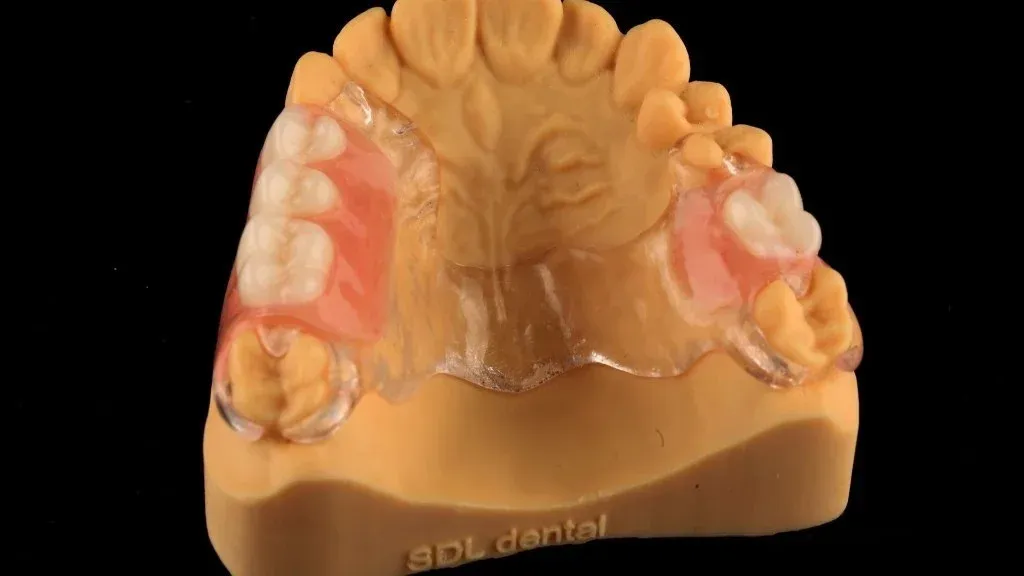
Flexible 3D Partials

Metal-free, printed from the scan a dental practice sends, and reproducible from the file — a lightweight flexible partial for esthetic, well-supported spans.

Flexible 3D partials pair a metal-free, tissue-toned base with a fully digital workflow — designed in CAD from your scan, printed, and reproducible from the saved file. For a comfortable, invisible-clasp partial on a well-supported span, it is an easy option to like.

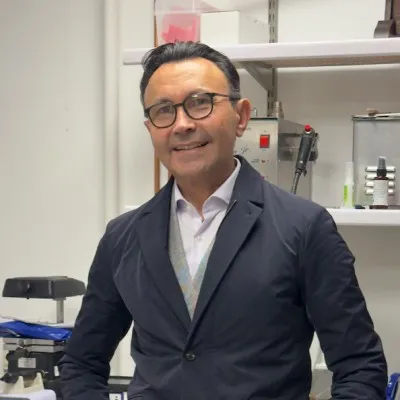
Jahn De Khudikine, Founder · Universal Dental Lab
Jahn De Khudikine Founder · Universal Dental Lab

Why send it here

A flexible partial that rocks was designed without the undercut pass. We survey digitally before print.

A practice's schedule lives or dies by the lab — I've watched one late case push back a whole day of chair time.

So I still know the cases moving through this lab, and I answer for how each one is made. Send a case here and it doesn't drop into a queue — it lands with me and one technician who carries it start to finish.

Start a case
Metal-free base
Tissue-toned clasps that blend at the gingival margin — no display of metal Designed from your scan in CAD before the first print
Archived for reprint
The approved design stays on file — a lost or damaged partial can match the original without a new survey Digital undercut review before print, not after a rocking fit
Your technician
One person holds your case Reach them directly — no call-center queue
Free scanner
3Shape TRIOS 6 for partners Go fully digital at no cost

Material Comparison

Flexible 3D, Valplast, or Cast Metal?

Metal-free flexibility versus an established nylon versus rigid support. We make all three — the span and the support usually decide it.

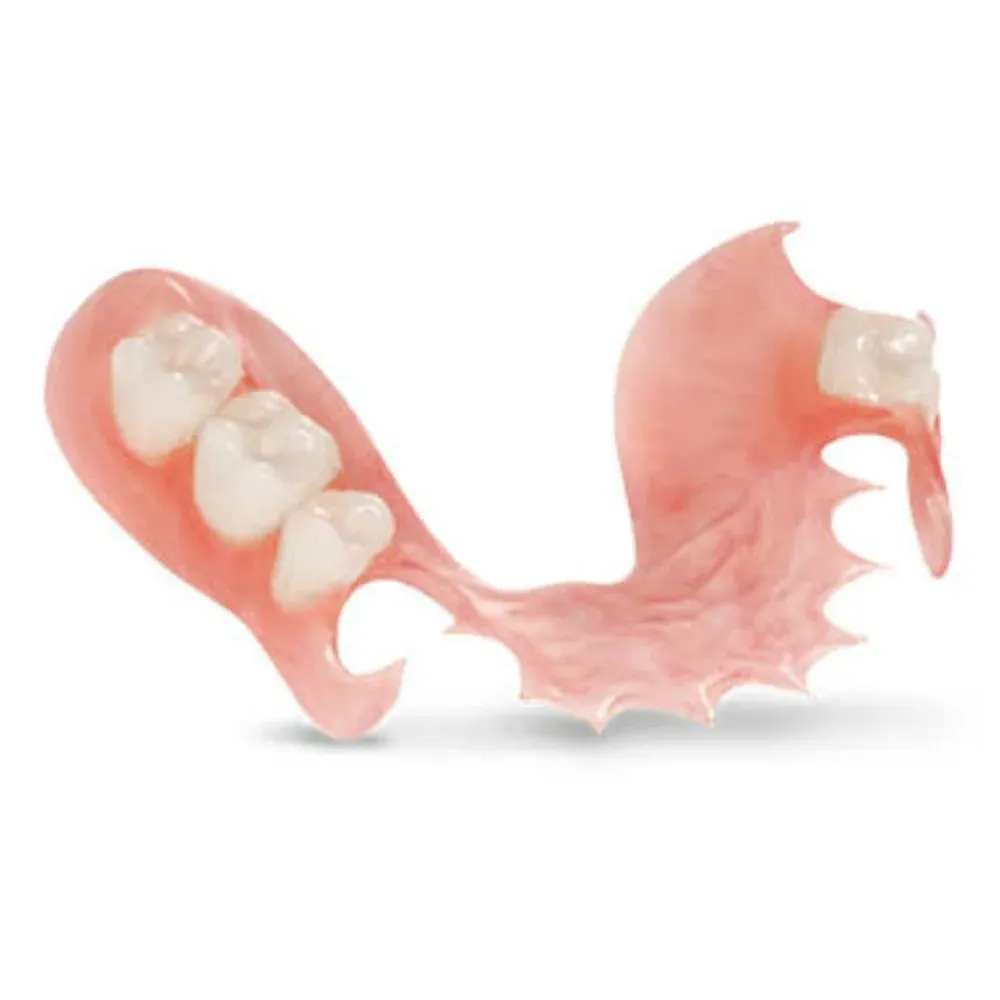
Printed flexible partial on the master model
Flexible 3D Partials You are here
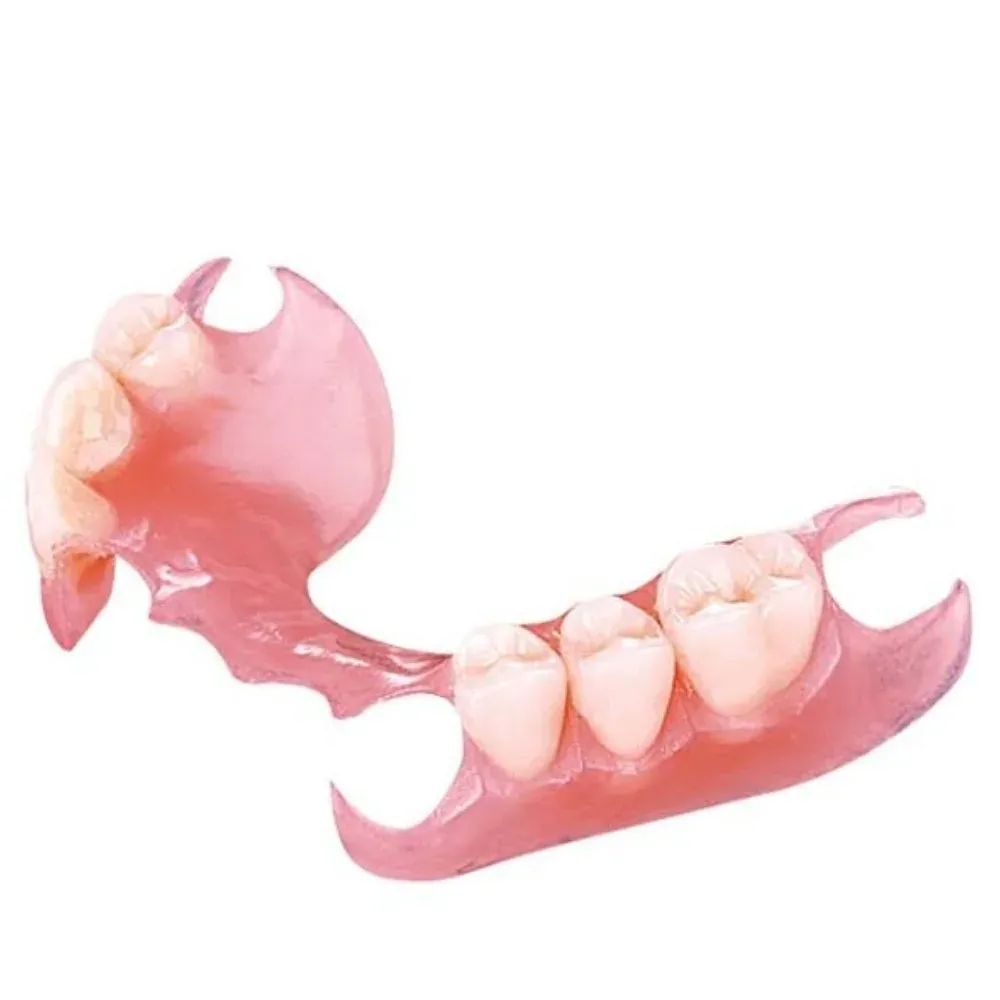
Injected nylon flexible partial with tissue-toned clasps
Valplast Partials
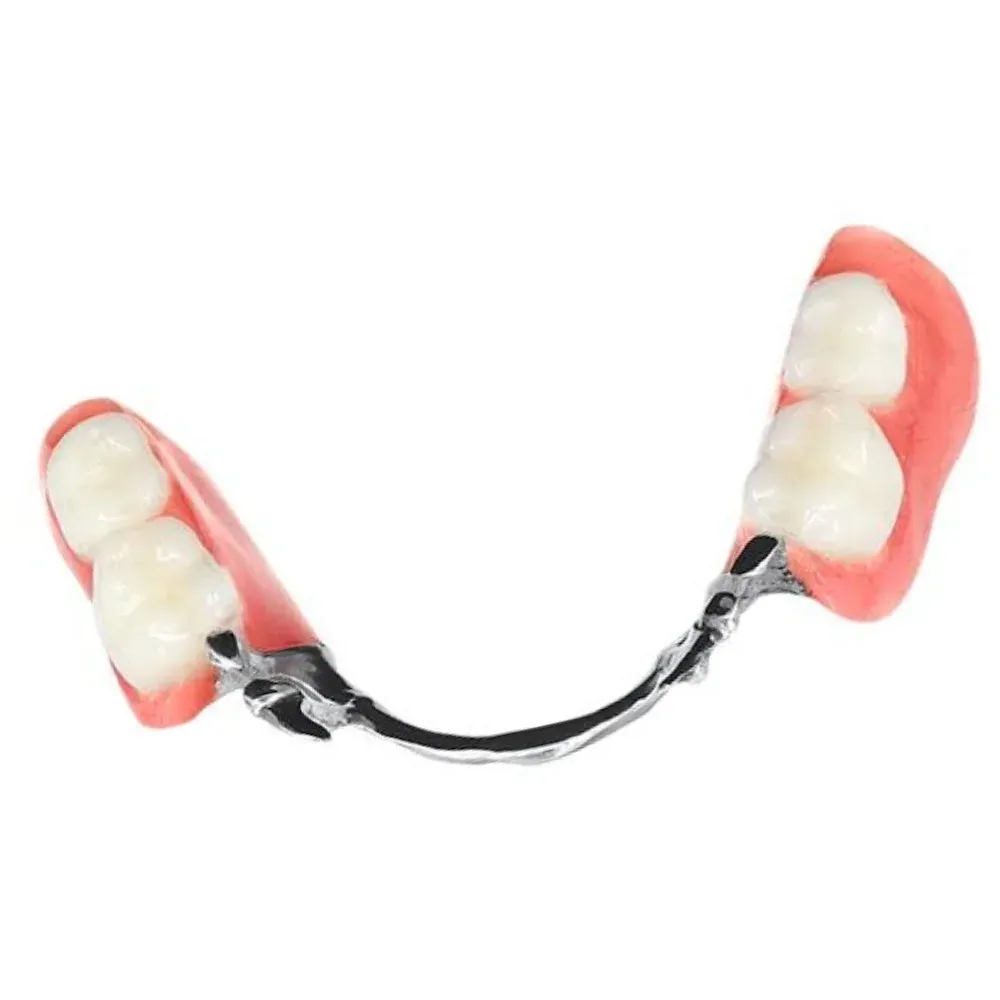
Cast CoCr partial framework on the master model
Cast Partial Frameworks
Fabrication 3D printed, digital Injected nylon Cast / milled CoCr
Rigidity Flexible tissue-borne base Flexible Rigid rest-supported
Best for Metal-free esthetics, reprintable from file Established flexible material, esthetic clasps Definitive support, distal extension

Flexible partial-denture resins vary in properties by brand and formulation, and suitability depends on the span and support of the specific case. Confirm case-specific requirements with the lab before you take the impression.

Material
Flexible partial-denture resin
Fabrication
3D printed from CAD
Rigidity
Flexible, tissue-borne
Turnaround
Quoted per case at intake
A printed flexible partial with tissue-toned clasps on the model

Overview

A Flexible Partial, Built the Digital Way

Flexible 3D partials pair a metal-free, tissue-toned base with a fully digital workflow. Designed in CAD from a scan and printed, the case is reproducible from the saved file — so a replacement matches the original instead of starting over.

The appeal is esthetic and practical at once. There is no metal clasp to show at the gum line, the base is thin and light to wear, and the flexible resin engages soft-tissue and tooth undercuts for retention. For a patient who wants a comfortable, invisible-clasp partial on a well-supported span, it is an easy option to like.

  • Metal-free: Tissue-toned clasps blend at the gingival margin — nothing shows at the gum line.

  • Reproducible: Built from a file, so a future reprint comes back matching the original.
Learn more
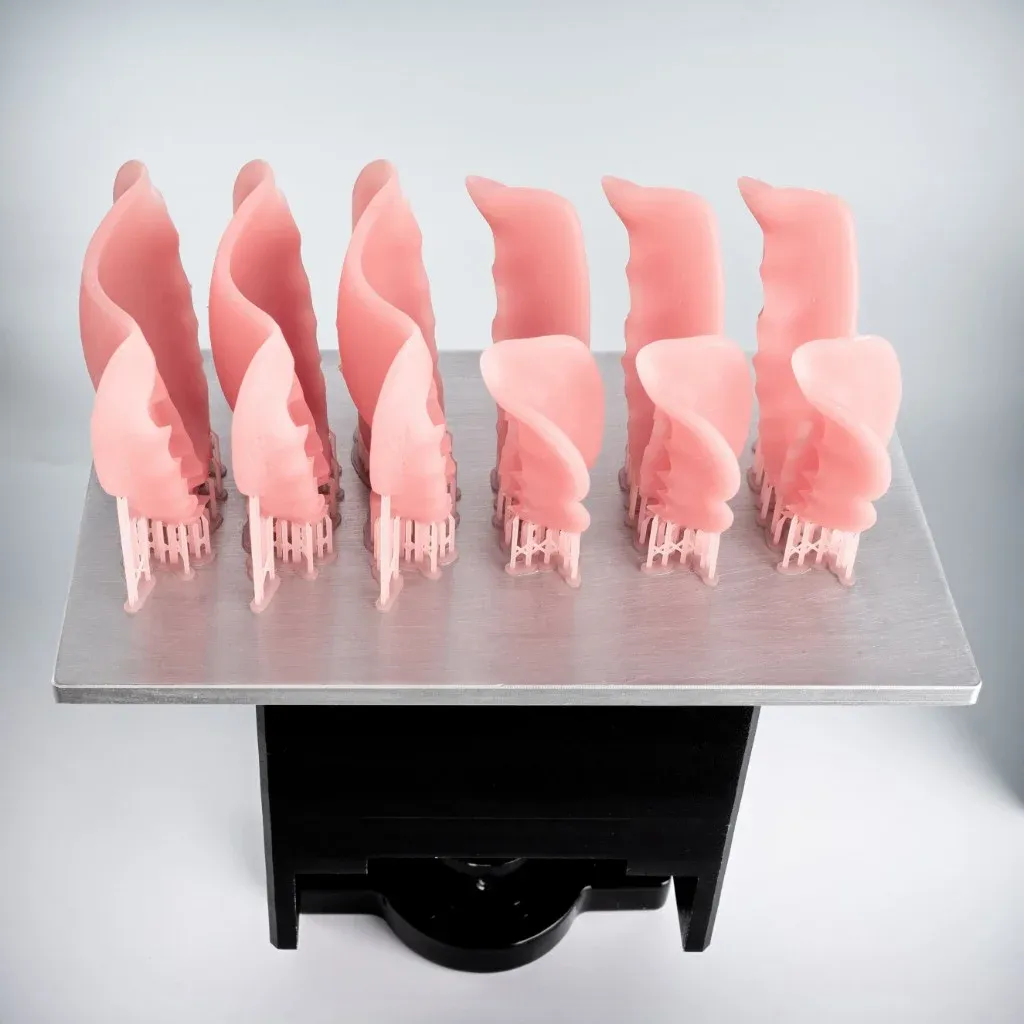
A flexible partial designed in CAD, ready for the printer

At the Bench

CAD Survey, Print, Archive for Reprint

The partial is designed in CAD from your scan with a digital survey pass for span, undercuts, and clasp esthetics before resin hits the printer. After print and finish, the approved file is kept so a replacement or duplicate reprints to the same design — not rebuilt from a new chairside impression unless the ridge changed.

  • Digital survey pass: Span length and undercut engagement are reviewed in CAD before print — the pass that prevents a rocking flexible base.

  • Print and finish QC: Fit and occlusion checked on the model after post-processing, with clasp esthetics aligned to your notes.

  • Design archived: The signed-off STL stays on file for a matching reprint if the patient loses or damages the partial.

Learn more

Know its limits

A flexible base is primarily tissue-borne, so it is not the tool for a long distal extension or a heavily loaded arch that needs rigid, rest-supported stability — that is cast framework territory. Flexible resins are also less forgiving of chairside grinding and relines than acrylic, so additions are planned, not improvised.

Case Selection

When a Flexible 3D Partial Is the Right Call

Indicated for

  • Metal-free partials where a visible clasp would be unacceptable
  • Small to moderate, well-supported spans in the esthetic zone
  • Patients who want a lightweight, comfortable removable option
  • Fully digital practices that want the case built from a scan and reprintable from the file
  • Cases where soft-tissue undercuts favor a flexible, tissue-toned base

Consider an alternative when

  • The case is a long distal extension needing rigid, rest-borne support — a cast framework is indicated
  • The patient is a heavy bruxer or the occlusion loads the partial hard
  • Frequent chairside relines or additions are anticipated — flexible resins are harder to adjust
  • A definitive, maximally stable prosthesis is the treatment goal on a compromised arch

Specifications

Flexible 3D Partial Specifications

Material, fabrication, and record data for planning the partial chairside.

Typical parameters for the printed flexible partials we make.
Material Biocompatible flexible partial-denture resin, 3D printed from a digital design
Fabrication Additive — designed in CAD from an intraoral scan and printed, so the case is reproducible from the saved file
Rigidity Flexible and primarily tissue-borne; the base flexes to engage soft-tissue and tooth undercuts for retention
Esthetics Metal-free with tissue-toned clasps that blend at the gingival margin — no display of metal
Weight & comfort Lightweight and thin; many patients find a flexible base comfortable to seat and wear
Clasp design Resin clasps engaging undercuts; retention is designed into the flexible base rather than cast metal arms
Adjustment Flexible resins are less amenable to chairside grinding and relining than acrylic — plan additions accordingly
Records Intraoral scan or impression, opposing arch, bite registration, shade, and design preferences
Restoration types Small to moderate-span removable partial dentures
Turnaround Quoted per case at intake

Flexible partial-denture resins vary in properties by brand and formulation, and suitability depends on the span and support of the specific case. Confirm case-specific requirements with the lab before you take the impression.

Case Submission

Sending a Flexible 3D Partial Case

We accept scans from all major intraoral systems, including iTero, 3Shape, and Medit — a digital scan is the ideal starting point for a printed partial.

Include with the case:

  • STL scan or impression of the arch and the opposing arch
  • Bite registration
  • Shade for the denture teeth and base
  • The span and teeth being replaced
  • Any esthetic priority for clasp positioning

Capturing the soft-tissue contours and undercuts clearly matters as much as the teeth, because a flexible base is tissue-borne. New to the lab? Open an account and we will walk you through the first case.

Start a case

Send one case. Keep the scanner.

Open a partner account and your first case moves with a shade record and our remake guarantee — if a unit does not seat, we redo it at no charge.

  • Free 3Shape TRIOS 6 scanner for active partners
  • Under-2% remake rate — remakes at no charge
  • One named technician you reach directly — no call center

Prefer to talk? +1 747-268-0808

No call center — you hear back from the lab, not a bot.

Flexible 3D Partial FAQ

Flexible 3D Partials — Questions Dentists Ask

The file. We design in CAD and print in a flexible partial-denture resin, so a lost or broken appliance can be reprinted from the archived design instead of starting over. Valplast remains the classic injection nylon when that material habit is what you want.

Long distal extensions and heavy occlusal load — those situations lead to instability and returns, and a cast framework is the better answer. We flag span or undercut concerns in CAD before printing.

Send a scan or impression of both arches, a bite, the shade, and which teeth are being replaced. Soft-tissue contours and undercuts matter as much as the teeth. Tell us if esthetics in a specific area is the priority so we position tissue-toned clasps accordingly.

Because the design is saved, a reprint is faster than a new case from scratch — provided the mouth has not changed. If undercuts or the ridge have changed, send a new scan and we update the file before printing.

Yes. Flexible partials suit some cases and not others. Send a diagnostic scan and we will advise honestly when a cast framework or acetal would serve the patient better.

How to send a file

Switching labs, de-risked

New to us? Because the partial is designed and reviewed in CAD before printing, a remake matches the original rather than being rebuilt from scratch — and the saved file keeps any future reprint fast.

Partner Offer

A Free Intraoral Scanner for Partner Practices

Partner with Universal Dental Lab and we place a 3Shape TRIOS 6 Wireless in your operatory — free for the length of our partnership. Scan the prep, send it in seconds, and skip impressions entirely.