
Custom Abutments

Milled titanium and zirconia abutments machined to the implant connection a dentist placed — emergence contoured to the tissue, and a margin you can actually reach.

A stock abutment forces the crown and the tissue to accept a shape someone else chose. A custom one reverses that — the emergence and the margin are designed to the site and the final restoration.

Jahn De Khudikine, Founder · Universal Dental Lab
Jahn De Khudikine Founder · Universal Dental Lab

Why send it here

The abutment sets emergence and screw access. We design both before anything is milled.

A practice's schedule lives or dies by the lab — I've watched one late case push back a whole day of chair time.

So I still know the cases moving through this lab, and I answer for how each one is made. Send a case here and it doesn't drop into a queue — it lands with me and one technician who carries it start to finish.

Start a case
Cleanable margin
Placed where you can actually clean the cement, not where a stock cuff left it Emergence contoured to the tissue you have
Machined interface
Milled to the exact implant system and platform — manufactured, not approximated Fit and anti-rotation checked on the analog before it ships
Your technician
One person holds your case Reach them directly — no call-center queue
Free scanner
3Shape TRIOS 6 for partners Go fully digital at no cost

Approach Comparison

Custom Abutment, Screw-Retained, or Full Arch?

Whether cement enters the picture at all is the decision here — these are three retention approaches, not three materials. We make all three.

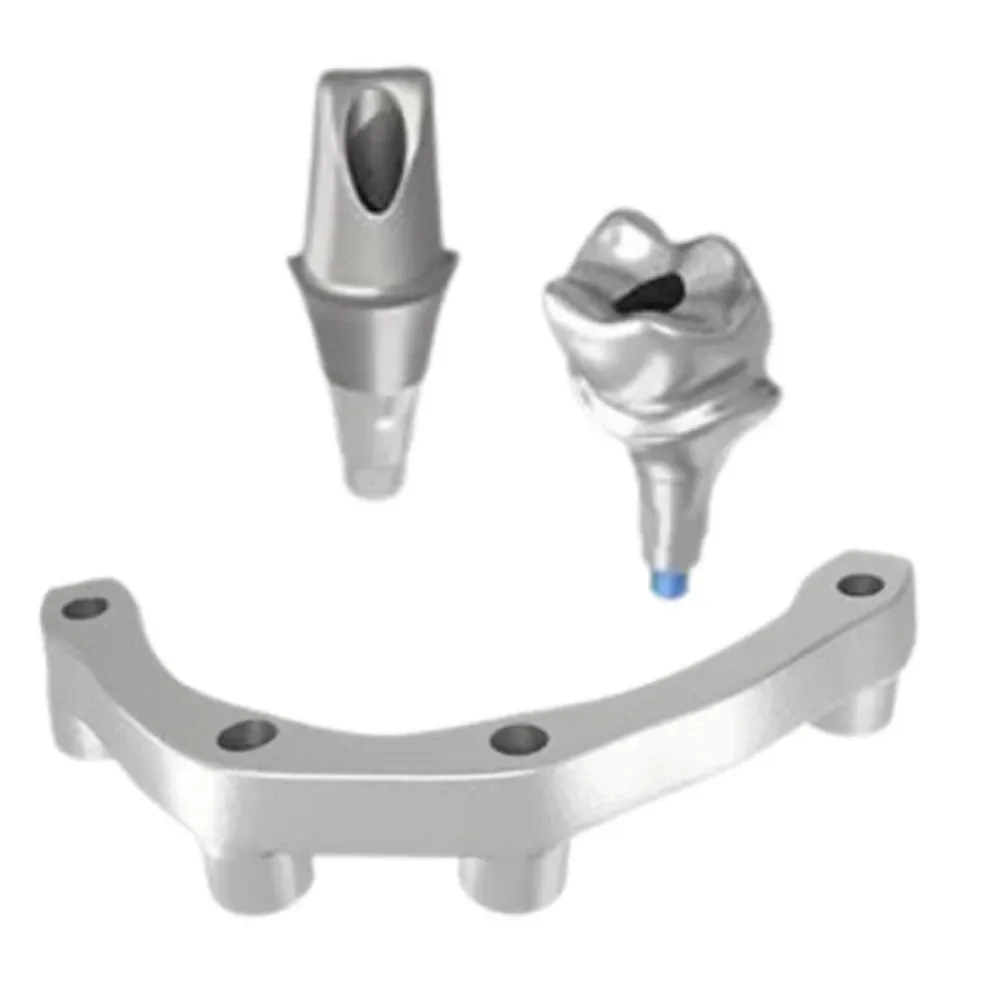
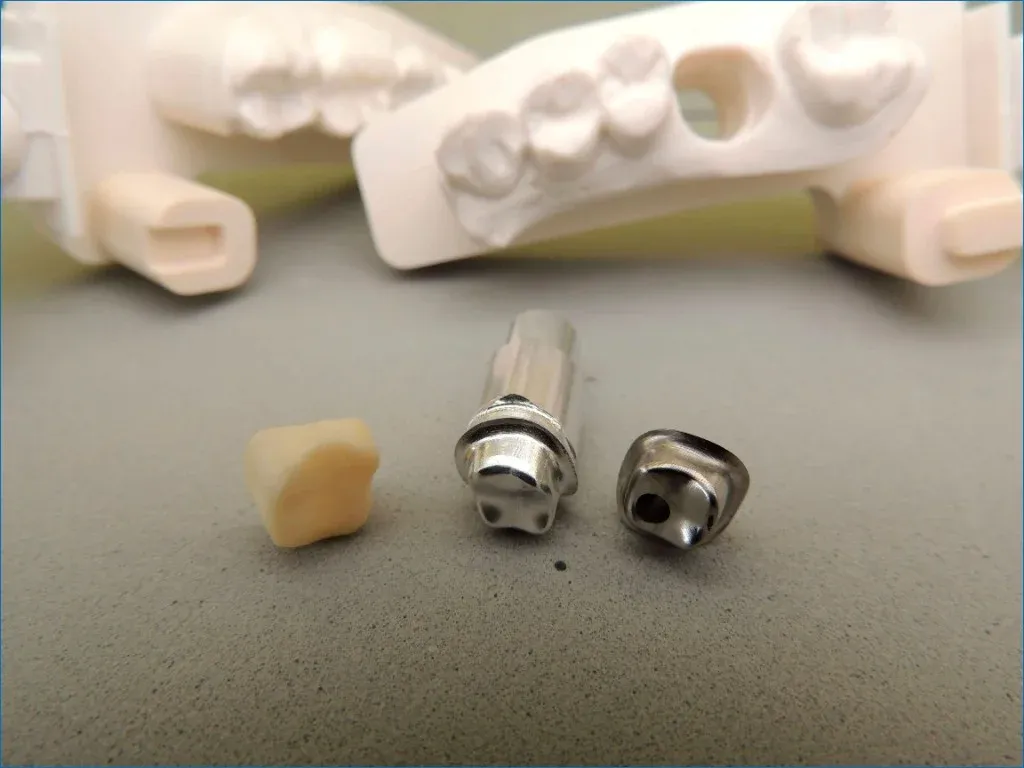
Milled titanium custom abutment on the implant analog
Custom Abutments You are here
Screw-retained implant crown with the access channel visible
Screw-Retained Crowns
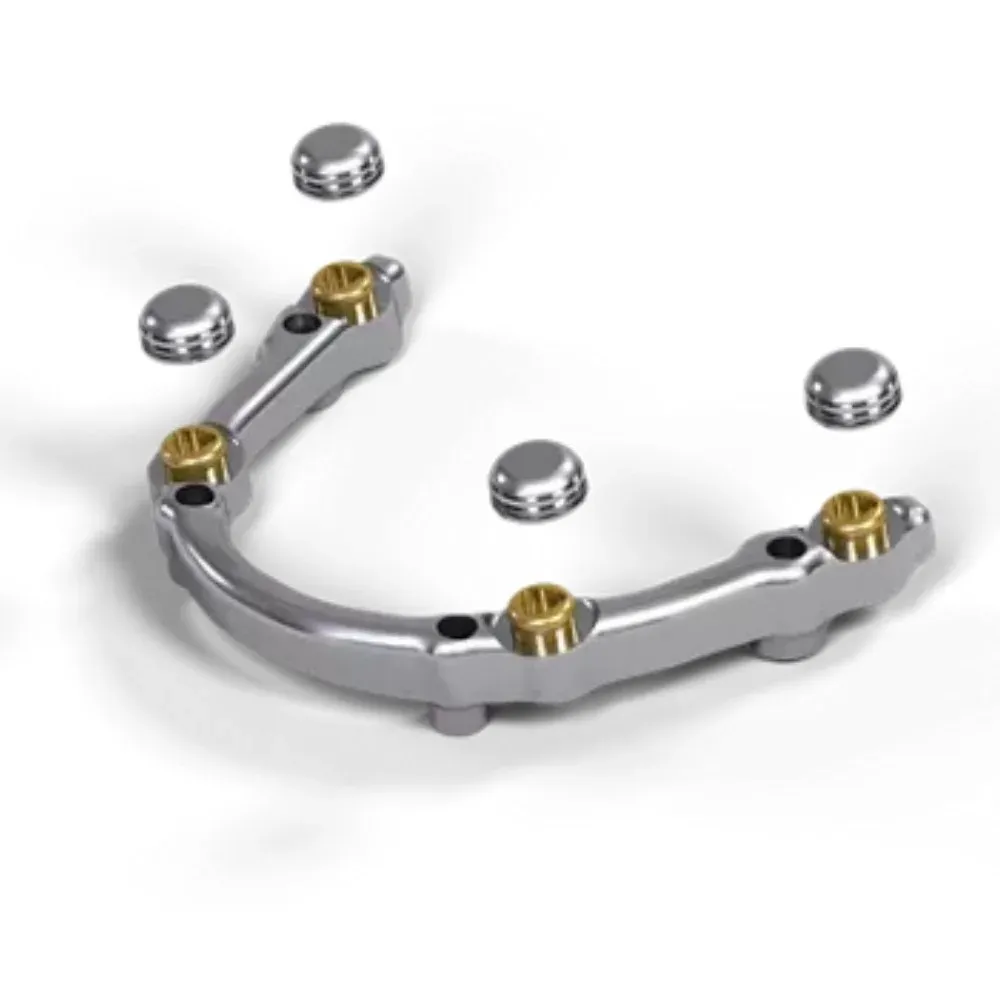
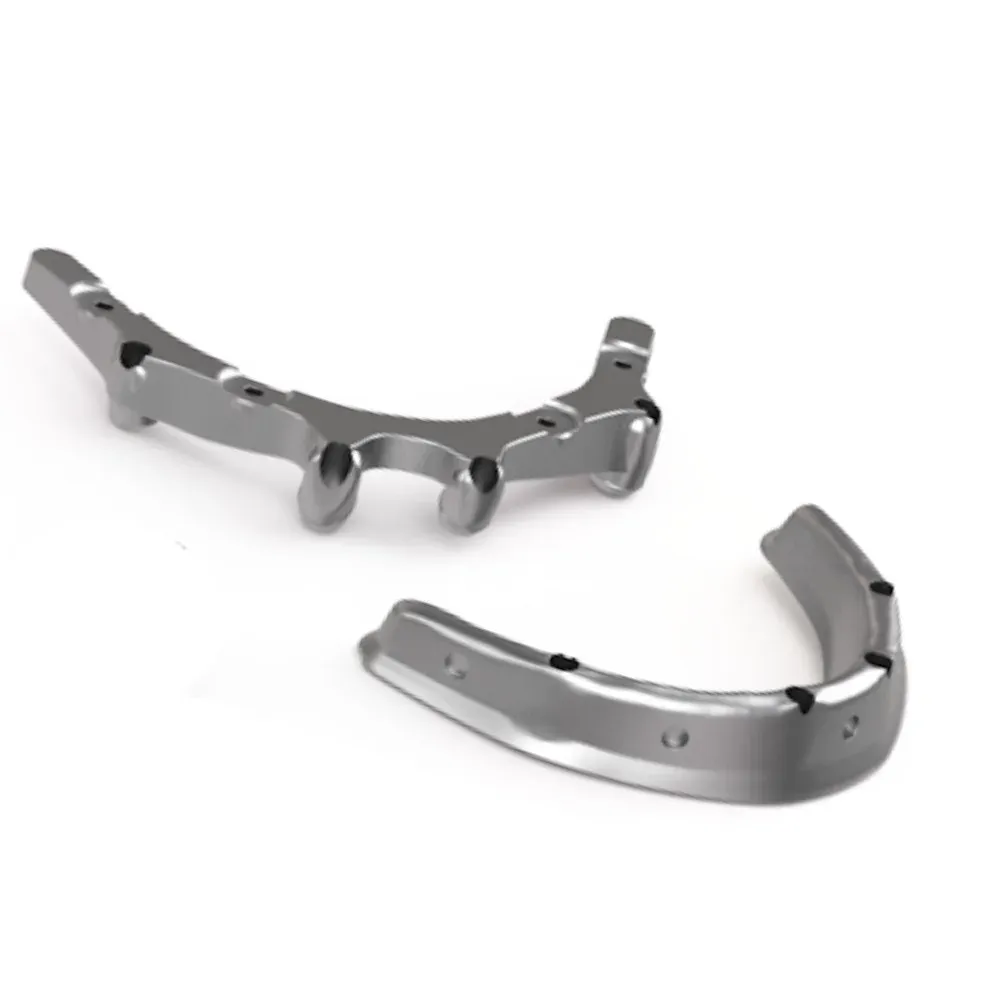
Full-arch implant hybrid prosthesis on multi-unit abutments
Full Arch Hybrids (All-on-X)
What it is Milled Ti or zirconia abutment Crown screwed to the implant Full-arch prosthesis
Cement? Cement-retained crown on top No cement retrievable Screw-retained
Best for Emergence, tissue shaping, margin access Retrievability, no cement risk Edentulous arch on 4+ implants

This compares the restorative approach rather than a single material, since a strict material-vs-material table would misread the choice. The right approach depends on implant position, retrievability needs, and how many units the arch carries — confirm the plan with the lab before you prescribe.

Materials
Milled titanium or zirconia on a Ti-base
Interface
System- and platform-specific
Design
Emergence profile + cleanable margin
Turnaround
Quoted per case at intake
Custom titanium abutment shaping the emergence toward the final crown

Overview

The Component That Decides the Emergence

A stock abutment comes with a cuff height and a contour someone else chose. If they do not match the tissue in front of you, the crown and the gingiva are left to accommodate a shape that was never designed for the case — and the cement margin ends up somewhere you cannot clean.

We mill custom abutments in titanium, or in zirconia bonded to a titanium base where the esthetic zone demands it. The implant interface is machined to the specific system and platform, so the fit at the connection is manufactured rather than approximated — which is exactly why the exact system has to be confirmed with the case.

  • Emergence profile: Contoured to support and shape the soft tissue toward the final crown, rather than forcing a stock cuff.

  • Margin position: Placed so cement can be cleaned — the main clinical advantage over a stock abutment with a deep, unreachable margin.

  • Angulation correction: Within limits, the abutment can correct the implant path for a cement-retained restoration.
Learn more
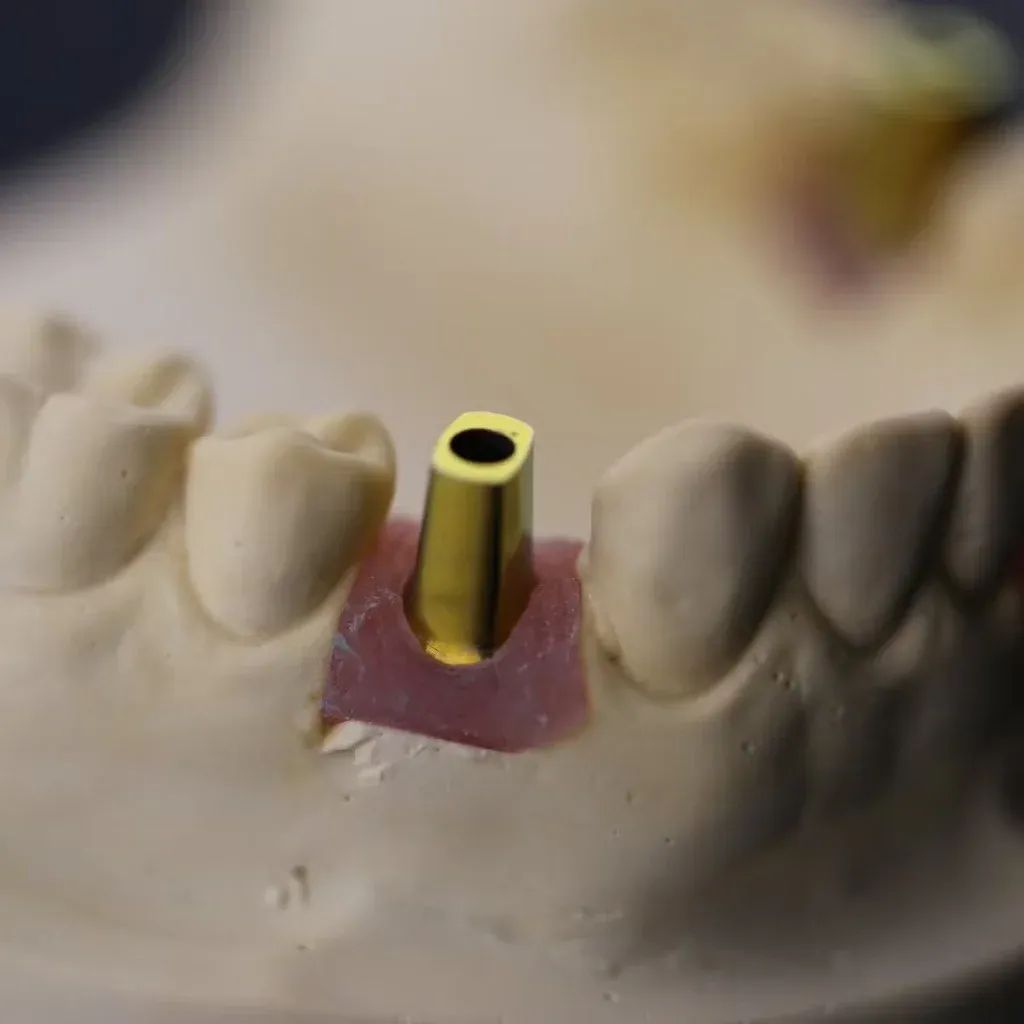
Custom abutment seated on the implant analog for a fit check

At the Bench

Machined to the Interface, Checked on the Analog

The abutment is designed in CAD to the confirmed implant components and milled, then seated on the analog to verify fit and anti-rotation before it ships. Because we design the abutment and its crown together, the two agree by design rather than at the chair. For how we approach the design itself, see custom abutment design.

  • Interface: Machined to the confirmed system and platform — the connection is manufactured, not adapted.

  • Fit and anti-rotation: Checked on the analog before the abutment goes anywhere near a box.

  • Abutment and crown as one: Designed together, so emergence, margin, and retention agree from the start.

Learn more

Before you prescribe

The implant interface is machined to the exact system and platform — it cannot be approximated. An ambiguous implant detail is the one input we will always stop and verify before fabrication.

Case Selection

When a Custom Abutment Is the Right Call

Indicated for

  • Implant restorations where a stock abutment cannot produce the emergence the site needs
  • Esthetic-zone cases requiring a zirconia or titanium abutment tuned to the soft tissue
  • Deep or shallow tissue where a stock cuff height leaves the margin unreachable
  • Angled implants where the abutment must correct the path for a cement-retained crown
  • Cases where the restorative margin has to be brought where you can clean cement from it

Consider an alternative when

  • The implant is well positioned and a screw-retained crown avoids cement entirely
  • A stock abutment genuinely fits the site and the emergence is acceptable
  • The angulation is so unfavorable that the case should be re-planned rather than compensated
  • The restoration is a full-arch prosthesis on multi-unit abutments

Specifications

Custom Abutment Specifications

Materials, interface, and record data for planning the implant restoration.

Typical parameters for the custom abutments we mill.
Materials Milled titanium, or zirconia bonded to a titanium base (Ti-base) where esthetics demand it
Fabrication CAD-designed and milled to the specific implant connection; the implant interface is machined, not adapted
Implant interface System- and platform-specific — the connection cannot be approximated, so the exact system must be confirmed with the case
Emergence profile Contoured to support and shape the soft tissue toward the final restoration, rather than forcing a stock cuff
Margin placement Positioned so cement can be cleaned — the main clinical advantage over a stock abutment with a deep, unreachable margin
Angulation correction Within limits, a custom abutment can correct implant path for a cement-retained restoration
Anti-rotation Engaging design for single units; the connection is checked on the analog for fit and rotation before shipping
Records needed Scan body capture or implant-level impression, opposing arch, bite, shade, and the exact implant system and platform
Restoration types Single-unit and multi-unit implant abutments
Turnaround Quoted per case at intake

Abutment design and material depend on the implant system, tissue biotype, and restorative space of the specific case. Confirm the exact system and platform with the lab before fabrication.

Case Submission

Sending a Custom Abutment Case

We accept scan body captures from all major intraoral systems, including iTero, 3Shape, and Medit — with the implant system details, since the interface is machined to them.

Include with the case:

  • Scan body capture or implant-level impression
  • Scan or model of both arches, and a bite registration
  • Shade photos
  • The exact implant system and platform
  • Cement- or screw-retained plan for the final restoration

An ambiguous implant detail is the one input we will always stop and verify — the connection cannot be approximated. New to the lab? Open an account and we will walk you through the first case.

Start a case

Send one case. Keep the scanner.

Open a partner account and your first case moves with a shade record and our remake guarantee — if a unit does not seat, we redo it at no charge.

  • Free 3Shape TRIOS 6 scanner for active partners
  • Under-2% remake rate — remakes at no charge
  • One named technician you reach directly — no call center

Prefer to talk? +1 747-268-0808

No call center — you hear back from the lab, not a bot.

Custom Abutment FAQ

Custom Abutments — Questions Dentists Ask

Whenever the stock cuff height and contour do not match the tissue you actually have. A stock abutment on a deep site leaves the cement margin somewhere you cannot reach, and its fixed emergence forces the crown and the tissue to accommodate a shape that was never designed for the case. A custom abutment reverses that — the emergence and the margin are designed to the site and the final crown. If the implant is well positioned and the tissue is average, a stock component may be perfectly adequate.

Milled titanium is the workhorse: strong, predictable, and appropriate almost anywhere function leads. In the esthetic zone, where a titanium abutment could show grayish through thin tissue, a zirconia abutment on a titanium base gives you the tissue esthetics with a machined metal interface at the implant. Tell us the tissue biotype and the site and we will recommend accordingly.

The exact implant system and platform. Also send a scan body capture or implant-level impression, both arches, bite, and shade. Tell us whether the final crown is cement- or screw-retained — that drives where the margin goes and how access is designed. Ambiguous implant detail is the input that stops the case.

How to send a file

Most abutment rework comes from ordering the two as separate parts — emergence, margin, and retention disagree. We confirm system, platform, and restorative space before designing, check the finished abutment on the analog for fit and anti-rotation, and keep the crown design in the same conversation from the start.

A confirmed system and platform keeps it short; a missing platform detail adds a clarification round. A titanium-base design and a full custom titanium abutment are different production paths, and a first-pass design approval matters more than calendar guesses.

Switching labs, de-risked

New to us? We confirm the system, platform, and restorative space before designing, and check every abutment on the analog for fit and anti-rotation before it ships — so the first case seats the way the second one will.

Partner Offer

A Free Intraoral Scanner for Partner Practices

Partner with Universal Dental Lab and we place a 3Shape TRIOS 6 Wireless in your operatory — free for the length of our partnership. Scan the prep, send it in seconds, and skip impressions entirely.