Dental 3D Printing

High-resolution additive manufacturing for models, guides, splints, and try-ins — accurate, repeatable, and built into a dentist's digital case flow.

Additive manufacturing has moved from novelty to daily production. We print directly from your intraoral scan to turn scans into physical models, guides, and appliances quickly and consistently.

Jahn De Khudikine, Founder · Universal Dental Lab
Jahn De Khudikine Founder · Universal Dental Lab

Why send it here

Print layer lines belong on the model, not on the occlusal surface. We orient and finish for function.

A practice's schedule lives or dies by the lab — I've watched one late case push back a whole day of chair time.

So I still know the cases moving through this lab, and I answer for how each one is made. Send a case here and it doesn't drop into a queue — it lands with me and one technician who carries it start to finish.

Start a case
From your scan
STL in — model, guide or appliance out iTero · 3Shape · Medit
Class I resin
Biocompatible guides & splints Post-cured to full material properties
Your technician
One person holds your case Reach them directly — no call-center queue
Free scanner
3Shape TRIOS 6 for partners Go fully digital at no cost

Workflow

From File to Finished Print

A predictable four-step path, with a check before the case leaves the lab.

  1. Design

    We import your STL, review the prescription, and design the model, guide, or appliance in CAD.

  2. Print

    The job is nested and printed at high resolution in the resin matched to the indication.

  3. Post-Process & Cure

    Parts are washed, supports removed, and post-cured to reach full mechanical and biocompatible properties.

  4. Inspect & Ship

    Each print is checked for fit, dimensions, and finish, then dispatched on the turnaround we quoted.

Input
STL from iTero, 3Shape, Medit
Resin
Matched to the indication
Post-cure
To full material properties
Turnaround
Quoted per case at intake
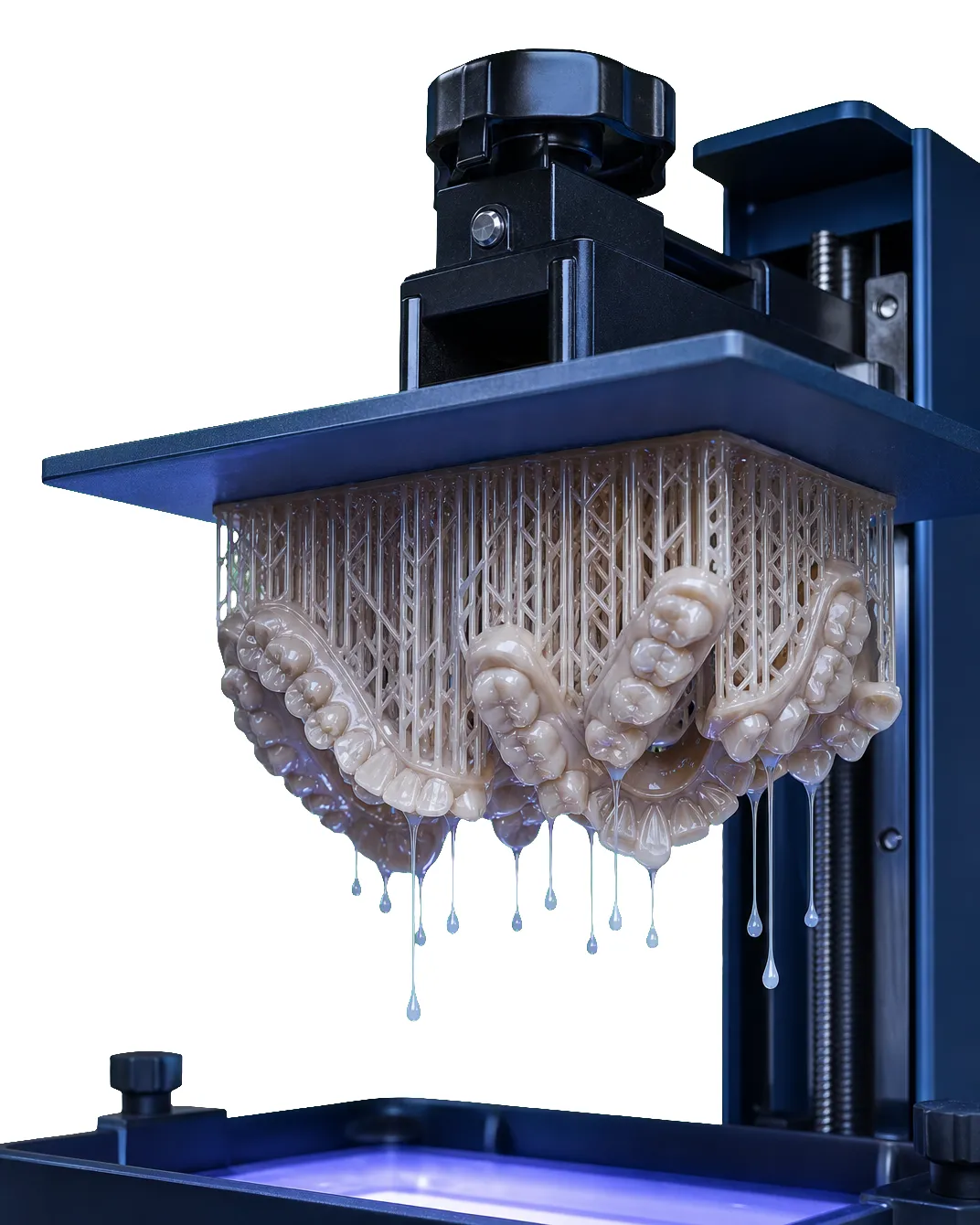
Resin 3D printer with the build plate raised from the vat, a full arch of printed dental parts on the plate still dripping uncured resin.
Build plate raised from the vat — the print still dripping resin, before wash and post-cure.

Overview

In-House Dental 3D Printing, Built Into the Digital Workflow

3D printing is a natural fit wherever a case is already digital. Instead of pouring stone or hand-building a pattern, we design in CAD and build the part layer by layer — so the model, guide, or splint you receive matches the file, not the mood of the bench that day.

  • Printing is not a replacement for every method: Definitive crowns, bridges, and frameworks are still milled or cast for strength.

  • Most cases use both: We combine printing with milling or casting to get the best of each.
Learn more
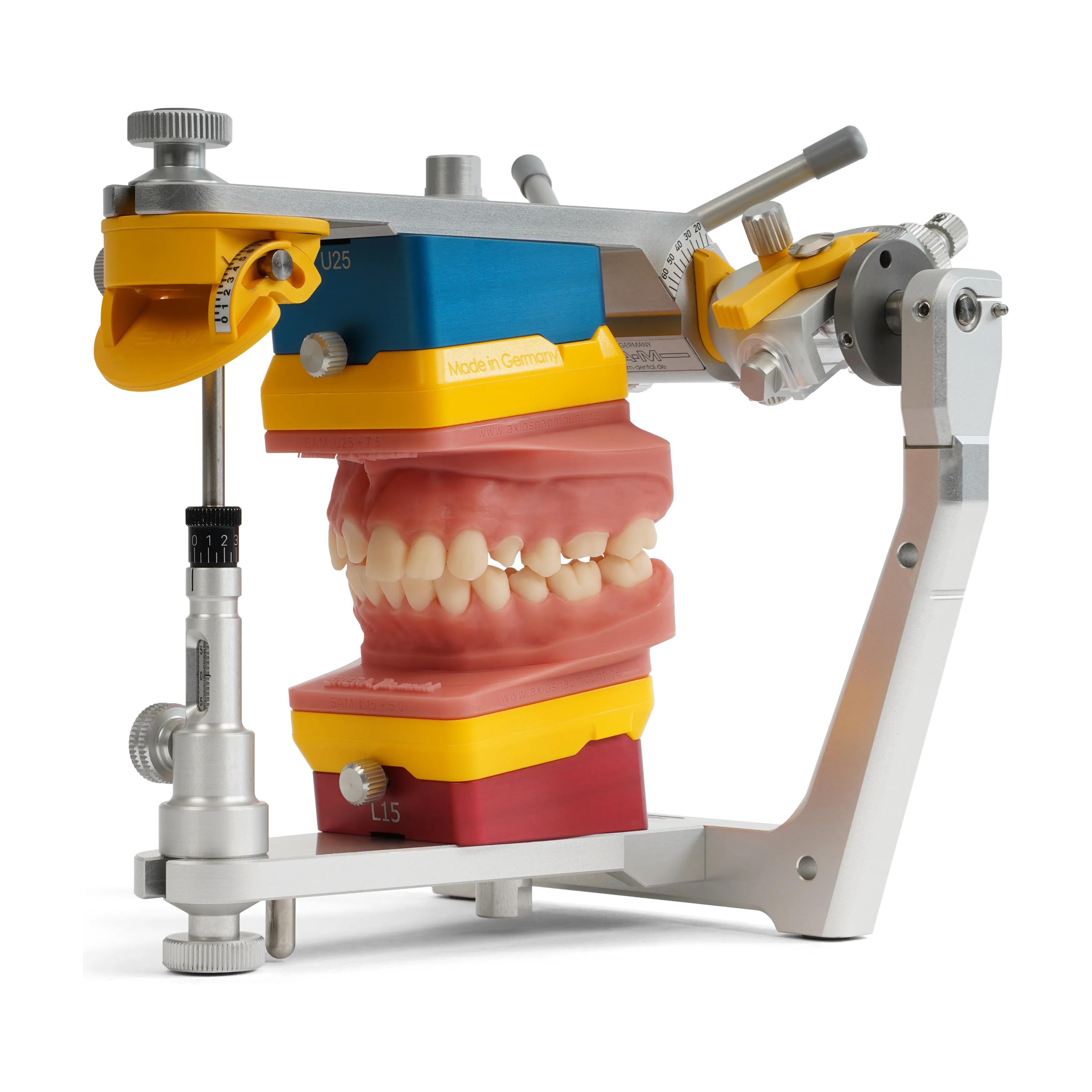
Upper and lower dental models mounted in occlusion on a dental articulator.
Working models mounted on the articulator, ready to check occlusion.

Straight From Your Scan

Scans In, Physical Models Out

Upload an STL and we design and print your working models and dies the same way, every time. No pour, no expansion, no distortion — the cast matches the file, so what you approve on screen is what seats in the mouth.

  • Articulator-ready: Trimmed models with removable dies and clean margins.

  • Reprintable: From the saved file at any time — no new record, no new pour.

Learn more
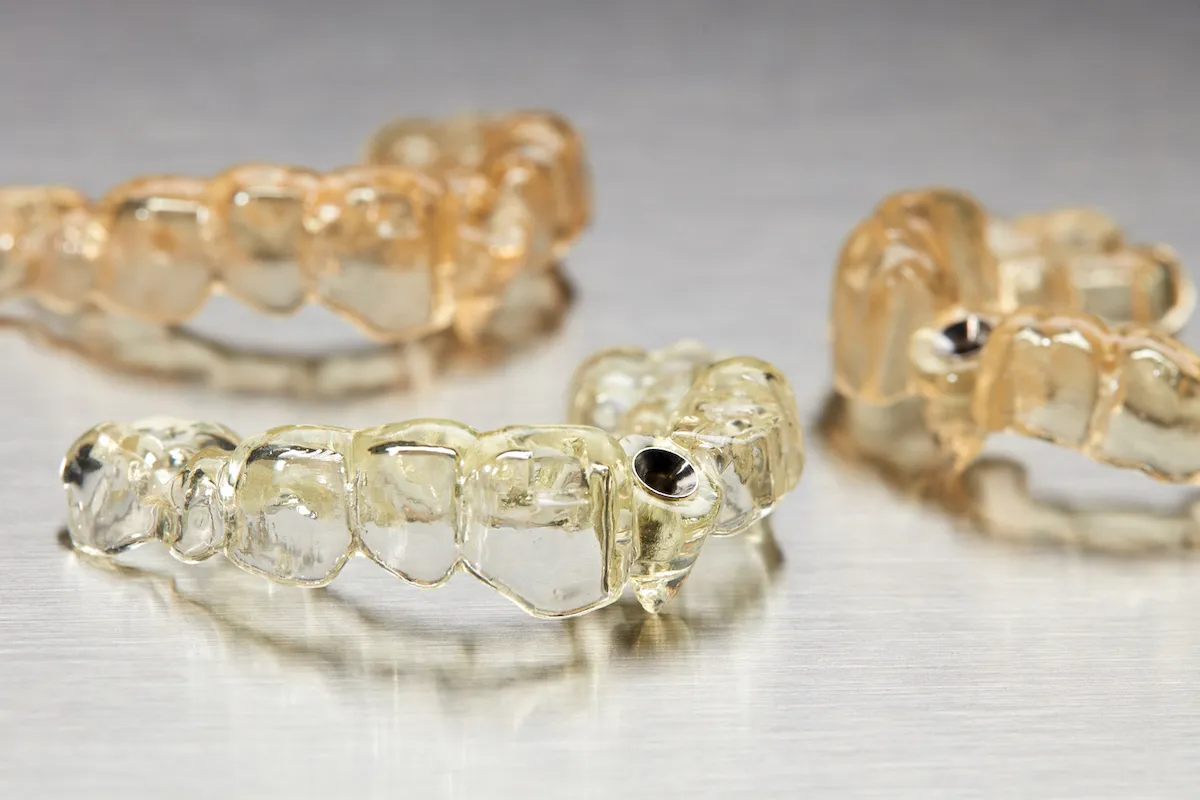
Clear printed surgical guides with metal guide sleeves on a brushed-steel bench.
Printed surgical guides with guide sleeves, post-cured.

Guides & Appliances

Guides, Splints, and Try-Ins, Print-Ready

From tooth- and tissue-supported surgical guides to occlusal splints and functional try-ins, each appliance is printed in a material chosen for its job and post-cured to full properties before it ships.

  • Material per indication: A surgical guide, a night splint and a model are not printed in the same resin.

  • Fit set in CAD, not at the bench: So a remake or a duplicate comes back matching the original.

Learn more

Where printing stops

Definitive crowns, bridges, and frameworks are still milled or cast for strength. Printing earns its place in models, dies, guides, provisionals, splints, patterns, and denture stages — where detail, speed, and repeatability matter most.

Applications

What We 3D Print

Send a scan and we handle the rest — from records to guided surgery to removable stages.

Study Models & Dies

Accurate printed models and removable dies straight from your intraoral scan — for restorative design, ortho, and records.

Surgical Guides

Tooth- and tissue-supported implant guides printed in Class I biocompatible resin for predictable guided placement.

Provisionals & Try-Ins

Printed temporaries, shells, and functional try-ins to confirm esthetics, contour, and occlusion before the final is made.

Occlusal Splints & Nightguards

Durable printed splints and guards for bruxism and TMD management in comfortable, stain-resistant materials.

Castable & Burnout Patterns

Printed patterns for copings, crowns, and RPD frameworks that burn out clean for casting or pressing.

Denture Components

Printed bases, try-ins, and teeth that speed the removable workflow and keep every stage reproducible.

Method Selection

When Printing Is the Right Method

  • Study models and removable dies
  • Implant surgical guides
  • Provisionals, shells and functional try-ins
  • Occlusal splints and nightguards
  • Castable and burnout patterns
  • Denture bases, try-ins and teeth

When a case needs both, we combine printed and milled or cast components in one workflow — the method is chosen per case, not per lab habit.

Advantages

Why Print the Case

  • Accuracy & Reproducibility

    High-resolution printing holds fine detail and repeats the same result across a full build plate, print after print.

  • Faster Turnaround

    Additive builds nest several cases in one run, shortening lead time on models, guides, and try-ins.

  • Consistent at Scale

    The case lives in a digital file, so a remake or duplicate matches the original exactly — no re-carving, no drift.

  • Less Bench Variability

    Fit, thickness, and margins are set in CAD, not left to a single hand at the bench.

Materials & Quality

Materials, Design, and Quality Control

Material Selection by Indication

Our technicians match the resin to the job: model resins for accurate working casts, Class I biocompatible resin for surgical guides, comfortable stain-resistant materials for splints and nightguards, and clean-burning resins for castable patterns. When a case could go more than one way, we advise on the trade-offs before printing.

Read the full quality process Show less

Digital Design and Quality Control

Every case is designed and reviewed in CAD — margins, contacts, occlusal clearance, and guide fit are checked before the job is nested. After printing, parts are post-cured and inspected for dimensional accuracy and finish, and we flag anything in the submitted file that needs clarification rather than guessing.

Fit and Reliability

Because the design lives in the file, results repeat. A remake or a duplicate comes back the same as the original, and multi-unit or full-arch work stays consistent across the build — less chair time spent adjusting, fewer surprises at seating.

Case Submission

Sending a 3D-Printing Case

We work with modern digital practices and accept scans from all major intraoral systems, including iTero, 3Shape, and Medit.

To keep your case moving, include:

  • An STL of the arch (and the opposing arch where relevant)
  • The prescription with the indication and material preference
  • Bite registration and shade notes when the case calls for them
  • Implant part details for guides and implant-supported work
  • CBCT / DICOM data for guided surgical planning

Not fully digital yet? Ship a physical impression and we will digitize it. New to the lab? Open an account and we will walk you through your first printed case.

Why Universal Dental Lab

Why Practices Print With Us

  • Clarification Before the Build

    Support strategy, resin choice, and STL gaps are flagged before the job nests — not after a failed print lands on your desk.

  • Post-Cure You Can Rely On

    Biocompatible resins are matched to the indication, post-cured to full properties, and checked for dimensions before anything intraoral ships.

  • One Digital File, Many Outputs

    Models, surgical guides, splints, and try-ins can chain from the same record without sending the case to a separate print vendor.

Start a case

Send one case. Keep the scanner.

Open a partner account and your first case moves with a shade record and our remake guarantee — if a unit does not seat, we redo it at no charge.

  • Free 3Shape TRIOS 6 scanner for active partners
  • Under-2% remake rate — remakes at no charge
  • One named technician you reach directly — no call center

Prefer to talk? +1 747-268-0808

No call center — you hear back from the lab, not a bot.

3D Printing FAQ

Dental 3D Printing — Questions Dentists Ask

Study models and dies, implant surgical guides, provisionals and try-ins, occlusal splints and nightguards, castable and burnout patterns, and denture workflow stages. If the case starts from an intraoral scan or STL, it can usually enter the printing queue without a separate vendor handoff.

Yes. Guides, splints, and intraoral appliances are printed in biocompatible resins rated for their intended use and post-cured to reach full material properties before they ship. We match the resin to the indication — a surgical guide, a night splint, and a model are not printed in the same material.

Send an STL from your intraoral scanner along with the prescription and any relevant records — bite registration, opposing arch, implant part details, or CBCT/DICOM for guided cases. We accept scans from iTero, 3Shape, and Medit, and will confirm before printing if anything in the file needs clarification.

Upload a digital file

For models, guides, splints, and patterns, high-resolution printing delivers the detail and dimensional accuracy these indications need, and it repeats reliably across a build. For definitive restorations we still mill or cast — printing and subtractive work are complementary, and we choose the right method per case.

Printing is ideal for models, guides, patterns, provisionals, splints, and denture stages. Definitive crowns, bridges, and frameworks are produced by milling or casting for their strength and longevity. When a case needs both, we combine printed and milled or cast components in one workflow.

Partner Offer

A Free Intraoral Scanner for Partner Practices

Partner with Universal Dental Lab and we place a 3Shape TRIOS 6 Wireless in your operatory — free for the length of our partnership. Scan the prep, send it in seconds, and skip impressions entirely.